Men's Health Web Platform
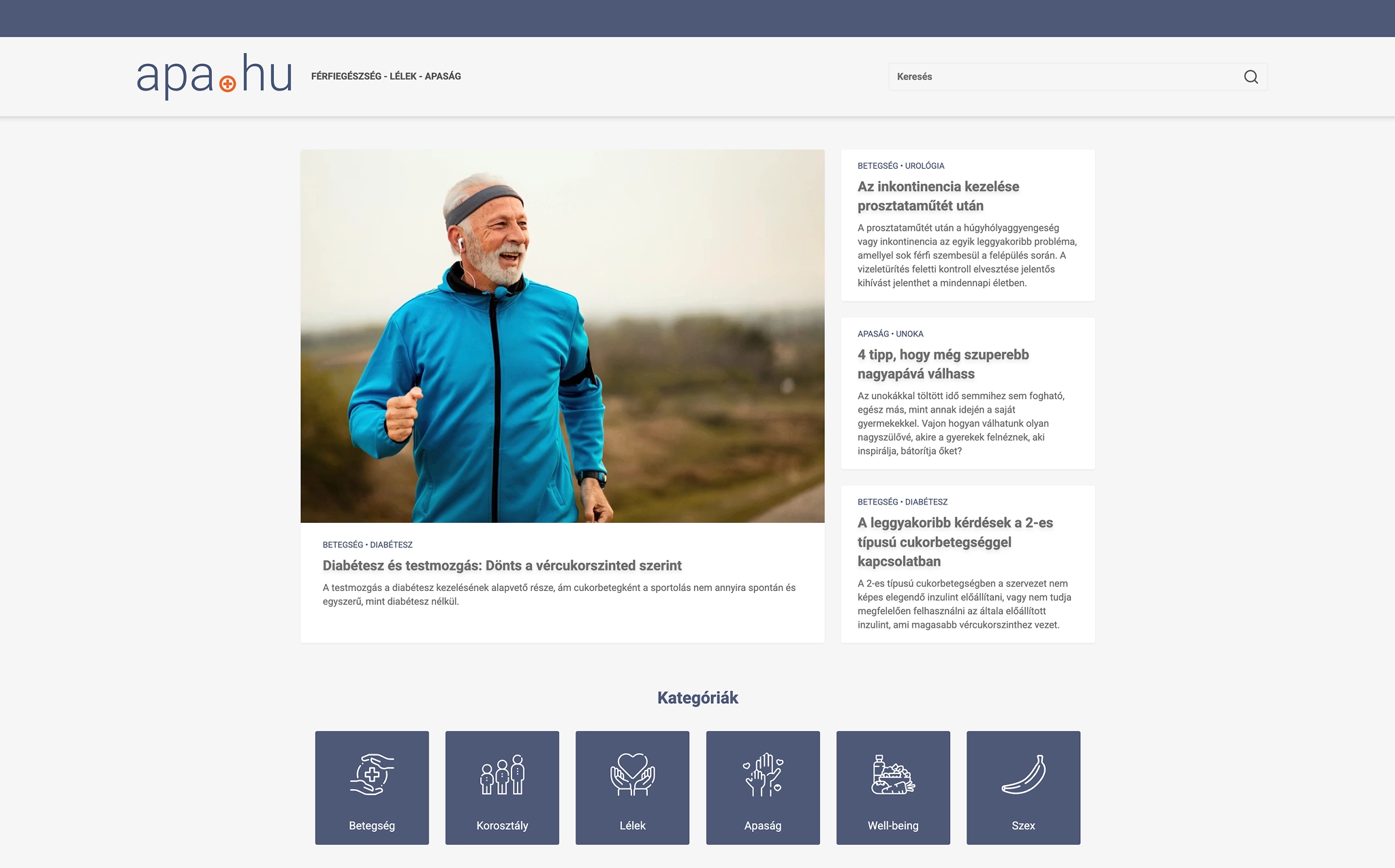
A web platform for a men's health publication focused on aligning editorial strategy with audience needs. It pairs a fast public site with a lightweight analytics pipeline that helps editors spot content gaps and topical imbalances beyond page-view metrics.

The challenge for a modern publication is twofold: deliver a fast, reliable experience to readers, and give the editorial team feedback that goes beyond page views. Editorial intuition matters, but it is hard to see the broader catalog: which topics are neglected, and whether related articles are well linked.
This project addresses that gap by pairing a performance-first public site with a lightweight analytics pipeline designed for editors, not data scientists. The public-facing site, built with
Instead of complex dashboards, the focus is on answering practical questions. Using text embeddings from the
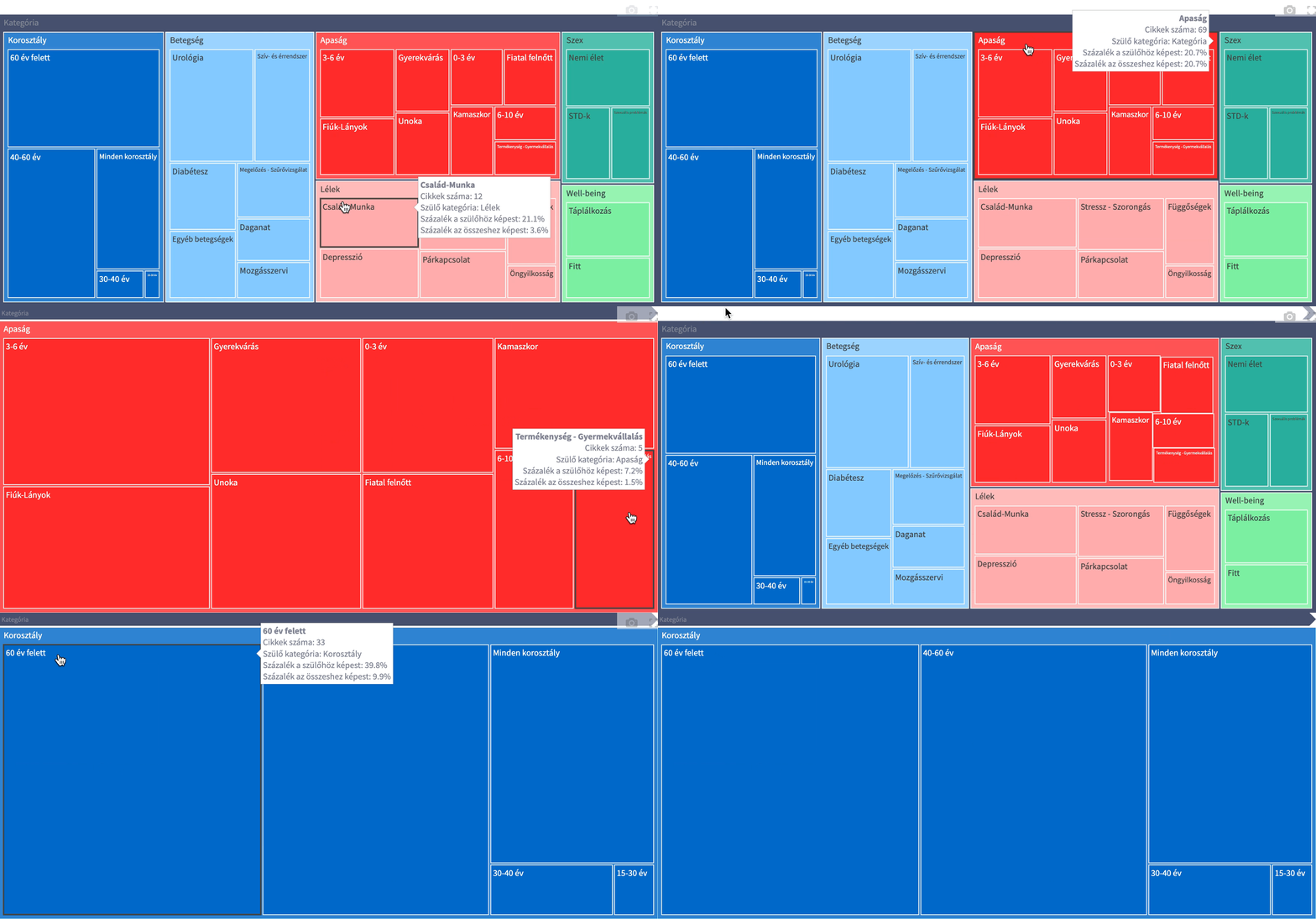
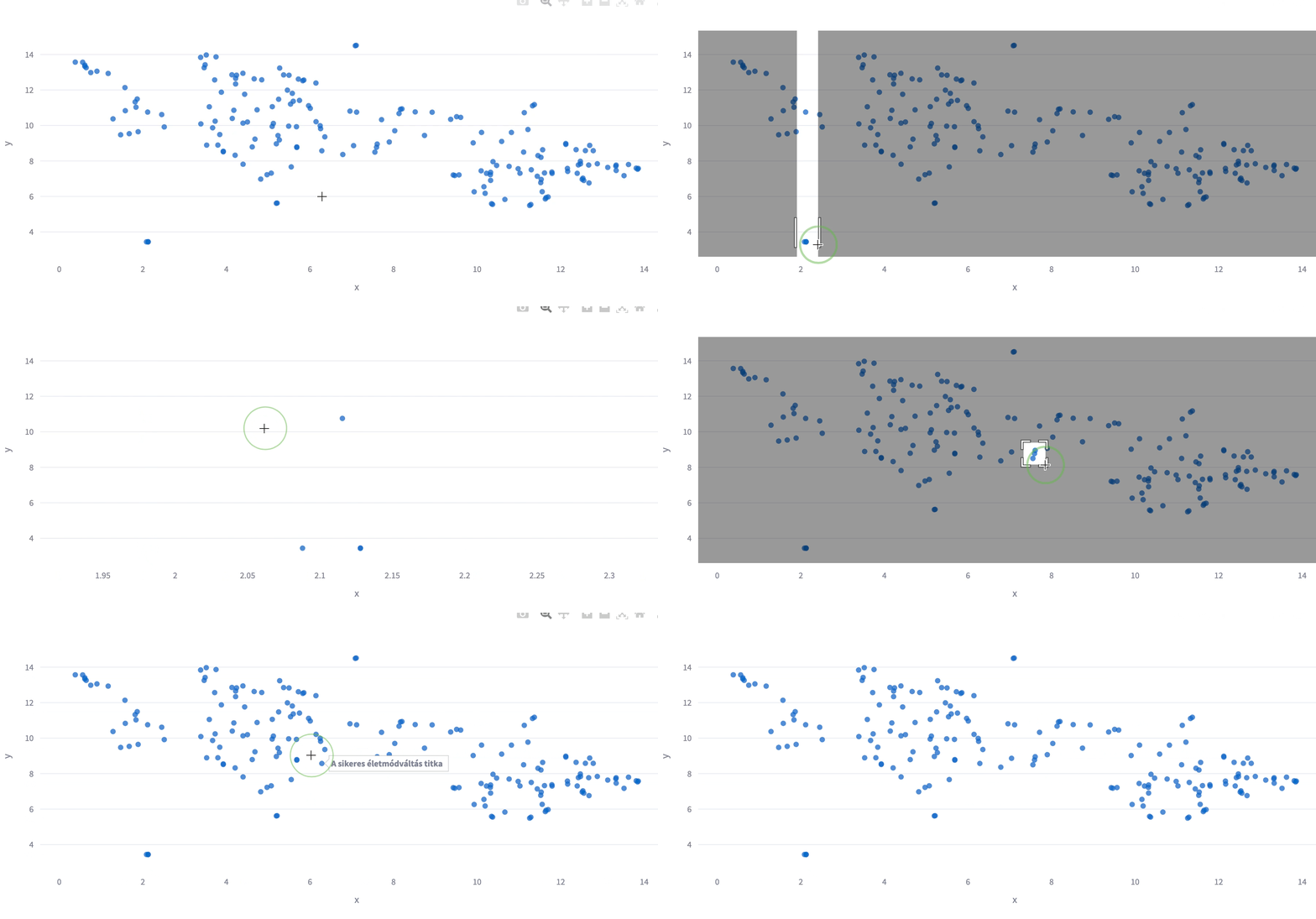
The visuals below show this in practice. The first gives a quick overview of the topical balance across the site, while the second maps the semantic neighborhood of articles, revealing clusters of related content. These tools are designed to be immediately useful for someone planning the next piece of content.
Stack
While the problem is more important than the tools, the tech stack tells a story about the project's architecture and trade-offs. Here's what this project is built on:
Platforms & Runtimes

Provides typed authoring for the Next.js frontend and server-side code to reduce runtime errors and improve developer DX.

Executes server-side TypeScript code for the web platform's Next.js frontend and API routes.

Serves the public website and compiles localized Hungarian pages with server-side rendering and incremental revalidation tied to CMS updates.

Runs the statistics/analytics service that generates interactive analysis and embedding pipelines for editorial content.
Frontend & Visualization

Renders interactive UI components across the public site and client-side experience, including measurement-aware analytics snippets.

Implements utility-first styling and responsive design across the public site to maintain a consistent editorial look and compact CSS output.

Applies component-scoped styling for specific interactive UI elements that require runtime theming and style encapsulation.

Hosts the internal statistics dashboard that editors use to explore article similarity, run visual analyses, and interact with dimensionality-reduced views.

Renders interactive charts and exploratory visualizations within the analytics UI for non-technical editorial users.

Generates declarative visualizations used in analysis notebooks and the internal exploratory views to surface dataset patterns.
AI & Machine Learning

Computes clustering and model-based transforms used for content grouping and as an input to visualization/insight generators.

Produces lower-dimensional embeddings for visualization (UMAP) to create interactive 2D/3D layouts of article-embedding spaces.

Generates text embeddings and NLP-driven insights used to power content similarity searches and automated analysis in the statistics pipeline.
Data Engineering

Stores and queries text embeddings for nearest-neighbor searches and similarity ranking used by the analytics pipeline and search tooling.

Transforms and filters large CSV/content exports using lazy evaluation to prepare data for embedding, visualization, and publishing workflows.

Handles columnar serialization and efficient exchange of parquet/arrow data between data-processing stages in the analytics pipeline.
Backend & APIs


External Services

Collects consent-aware client-side metrics and engagement events used for editorial analytics and measurement dashboards.

Manages and tracks advertising campaigns to drive targeted traffic.

Manages email newsletters and subscriber lists, enabling editorial teams to distribute content updates and health tips to their audience.
Cloud & DevOps

Provides S3 object store for embeddings, exported artifacts, and static assets accessed by both web and analytics components.

Hosts the Python analytics service with configured regional settings and runtime parameters for the statistics application.

Deploys and serves the Next.js public site, providing CDN distribution and edge routing for global visitors.

Packages the analytics service environment for consistent deployment and healthchecked container runs in the hosting platform.

Schedules and runs automation jobs (e.g., nightly cache revalidation) to keep public content caches and site revalidation up to date.
Development Tooling

Accelerates Python dependency installation and reproducible environment setup used inside the project's containerized builds.

Builds and packages the Python analytics project for editable installs and CI-driven artifact generation.

Provides fast linting and code quality checks for Python sources to catch common issues and enforce style rules before commits.

Enforces consistent code formatting across the repository, improving cross-team readability and pre-commit hygiene.

Runs static analysis on TypeScript/JavaScript sources to prevent common runtime issues and uphold style rules.