Driva
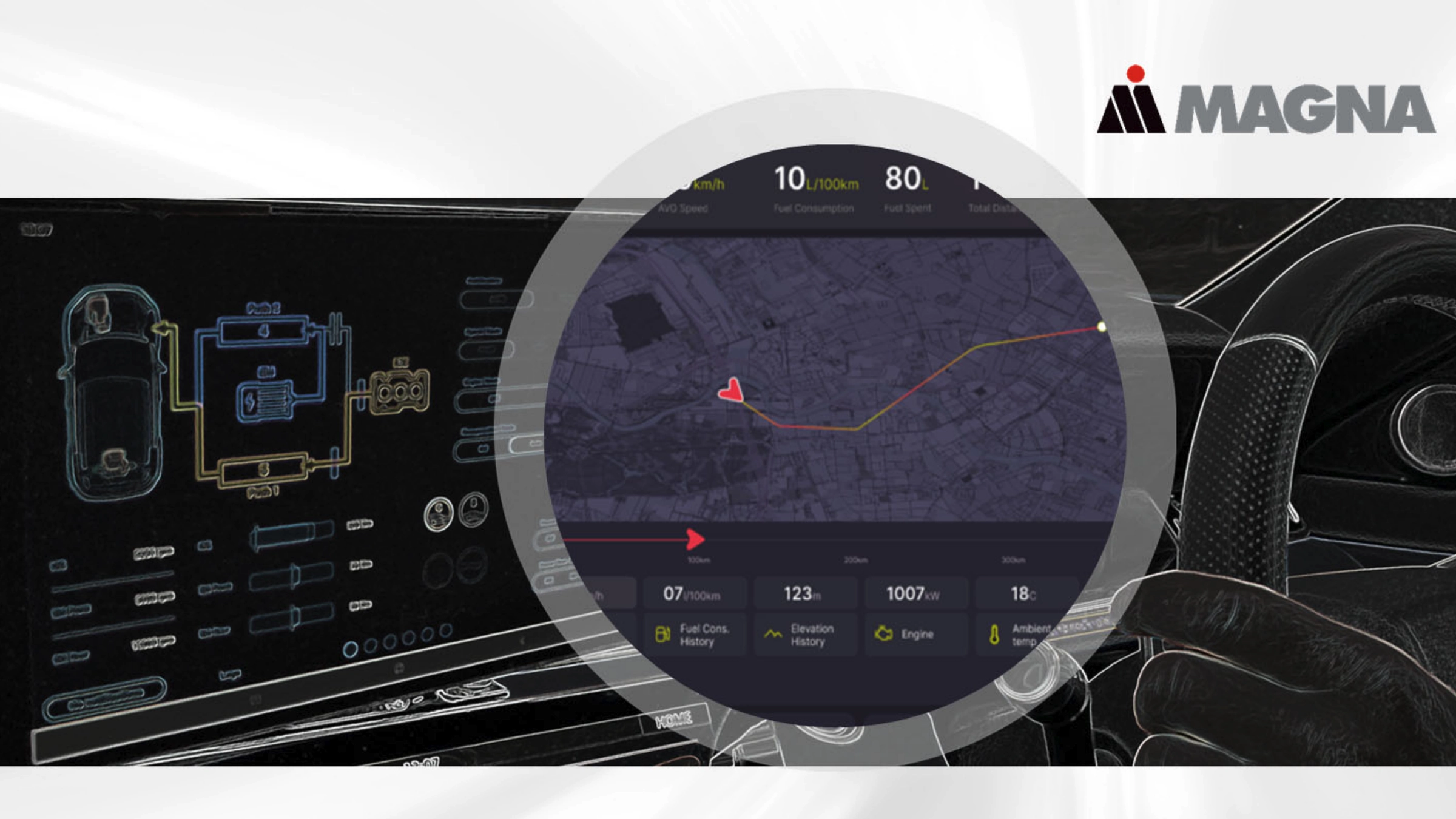
An exploration of how to translate vehicle telemetry into driver-facing feedback. The project focuses on turning raw automotive signals into interpretable metrics that support safer and more efficient driving.



Modern vehicles produce large volumes of telemetry, but raw measurements are not the same as insight. The hard part is translation: turning a stream of signals into feedback a driver can understand and act on. This project explored that translation, with an emphasis on clarity and trust.
The core of the work was in designing a system as part of Magna’s SmartBridge™ suite, that could bridge the gap between machine-generated data and human understanding. This required a robust architecture capable of processing and orchestrating real-time data, but the focus was always on the end experience. The goal was to deliver clarity, helping people see not just how far they drove, but how they drove—safely, efficiently, and sustainably.
To maintain coherence across a complex, multi-platform system, a key principle was establishing a single source of truth for communication between services. By automatically generating typed SDKs for the
Ultimately, this project served as a proof of concept for a more human-centric approach to automotive IoT. With careful engineering, even low-level signals can become practical feedback for everyday drivers.
Stack
While the problem is more important than the tools, the tech stack tells a story about the project's architecture and trade-offs. Here's what this project is built on:
Platforms & Runtimes

Implements the Flutter mobile application's UI and platform build targets to deliver native Android and iOS apps for vehicle telemetry and user interactions.

Drives server and shared library development across backend services and serverless handlers, enabling typed contracts and safer refactors across the platform.

Powers browser runtime for the React web dashboard and small utility scripts used in site automation and tests.

Used for Fastlane scripts that automate Flutter app builds, code signing, and TestFlight/App Store deployments.
Runs compiled TypeScript backend services, serverless function emulators, and development servers used throughout backend and frontend workflows.

Target platform for Flutter app builds and distribution to testers and end users.

Target platform for Flutter app builds and TestFlight/App Store distribution for mobile users.
Frontend & Visualization

Constructs the cross-platform mobile application to present driving telemetry, handle device integrations, and produce production-ready Android and iOS builds.

Renders the single-page DriveInsights dashboard, composes visualization components and maps, and manages client-side interactions for trip analysis and recorded-trip workflows.

Manages client-side navigation and deep linking across dashboard views, recorded trips, and settings screens to preserve UI state during navigation.

Implements the dashboard's design system and responsive component primitives used in tables, forms, and dialogs to keep UI consistent across views.

Displays interactive geospatial maps and trip traces in the web UI, enabling pan/zoom, markers, and visual route overlays for route analysis.

Provides CSS utilities and a responsive grid used in portions of the web UI and landing pages for consistent spacing and layout fallbacks.

Backend & APIs

Hosts API endpoints and server-side logic that process telemetry, orchestrate aggregation workflows, and expose OpenAPI specifications consumed by client and automation tooling.
Generates machine-readable API specifications used to produce client SDKs, validate contract changes, and drive API-driven CI tasks.
External Services
Receives device telemetry from in-vehicle IoT devices and forwards messages into backend ingestion pipelines and simulator tools.

Houses static assets and user-uploaded media (vehicle and user images) in containerized blobs used by the web UI and mobile app for asset delivery.
Provides enterprise authentication and single sign-on for dashboard users and API clients, integrated with frontend auth flows and backend token validation.
Cloud & DevOps

Automates Flutter app build, code signing, and deployment workflows for iOS and Android applications.

Hosts serverless aggregation and event-driven functions that execute trip processing, scheduled tasks, and lightweight server-side jobs.

Hosts web dashboard and API web apps with automated deployment from CI and standard platform scaling for production traffic.

Runs CI workflows that lint, test, build, and deploy frontend and backend projects to Azure on merges to the main branch.
Development Tooling

Runs unit and integration tests for TypeScript services and React components with coverage thresholds enforced in CI.

Enforces JavaScript/TypeScript linting rules and prevents common issues across frontend and backend repositories, integrated into CI lint checks.

Normalizes code formatting across projects to produce consistent diffs and to enable automated formatting in CI.

Manages Node.js package installation and scripts used across web and backend projects to run builds, tests, and code generators.